AI Freight Procurement Engine for Smarter Shipping Rates

A freight quote can look simple at first glance. One origin, one destination, one price. But anyone who moves international cargo knows the number on the screen is only the visible part of the decision.
Behind that number sits a chain of choices. Which carrier will move the freight? Which port makes sense? Is the sailing schedule realistic? Are inland costs included? Do surcharges change the economics? Will the shipment fit the carrier’s rules, documentation flow, and cutoff times?
That is where Freight-Calculator.com and Global MAX Shipping AI are designed to add value. The goal is not only to show a price. The goal is to combine negotiated carrier rates, routing knowledge, shipment details, and practical forwarding experience into a price-and-route option that can actually work.
The bigger idea is even more useful. When a better lane agreement is negotiated, that improvement can support future eligible shipments on the same route. A stronger rate does not have to end with one transaction. It can become part of a growing procurement resource for the next shipper that needs that lane.
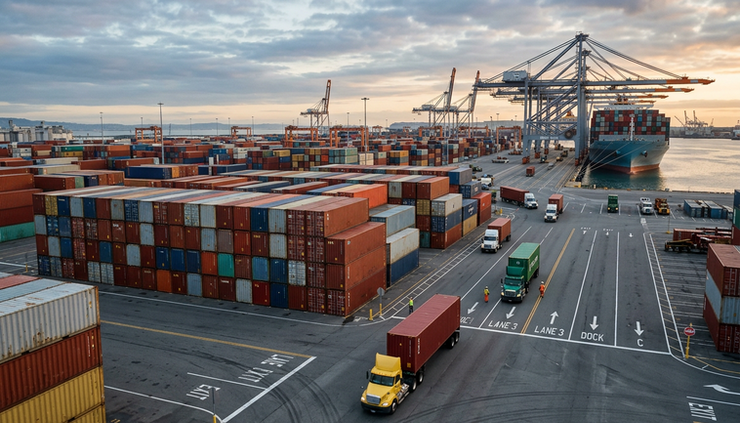
A freight quote is only useful when the route behind it makes sense. Global MAX Ai Freight Procurement does it for you.
International shipping rarely comes down to a single clean comparison. Two offers may both cover the same destination, but they may not represent the same shipment experience.
One quote may use a nearby port of loading. Another may depend on a more distant port with lower ocean pricing but higher inland drayage. A third option may look fast on the water but require a cargo cutoff the shipper cannot meet.
The total decision can involve:
Ocean freight
Port fees
Origin and destination charges
Inland pickup or delivery
Equipment availability
Carrier routing
Transit time
Sailing frequency
Cutoff dates
Surcharges and accessorial fees
Documentation requirements
A low rate can lose its value if the route creates delay, risk, or hidden cost. A higher base rate may be the better choice if it avoids a costly inland leg or improves schedule reliability.
That is why a procurement engine matters. It keeps the rate connected to the shipment requirements. It does not treat every quote as a standalone number. It judges the rate in context.
More choices do not always create better decisions
Shippers often ask for multiple rates because more options feel safer. That makes sense. A narrow rate search can miss better carriers, better ports, or better transit patterns.
Still, more choices can also create confusion. Carrier A may be cheaper on the ocean leg. Carrier B may have a better service string. Carrier C may offer more attractive routing, but only if cargo can move through a specific terminal. Carrier D may look expensive until the full inland cost is included.
A useful freight platform has to do more than list possible options. It needs to help interpret them.
A basic quote comparison | A procurement-led rate decision |
Compares visible prices | Compares the total movement |
Focuses on the ocean rate | Includes routing, fees, and service factors |
Treats each quote as separate | Learns from improved lane agreements |
Leaves interpretation to the shipper | Brings pricing and forwarding knowledge together |
May miss operational limits | Checks the route against shipment needs |
This is where AI Freight Procurement can support smarter buying. The technology can process shipment information, match it against available carrier pricing, and help surface route choices that make practical sense. Human freight expertise still matters, especially when exceptions, documentation, cargo type, and carrier service details affect the move.
The best result comes from combining both. Software can compare and calculate at speed. Freight professionals can judge whether the option is workable.
Negotiated carrier rates become more valuable when they keep working
Carrier negotiation has always been part of international freight forwarding. A forwarder or platform with active shipment volume can often pursue lane rates that individual shippers may not access on their own. That is especially true when a specific trade lane has repeat demand.
The difference with a procurement engine is that the benefit can last beyond the first shipment.
If a better carrier agreement is secured for a lane, that rate can be added to the system for future eligible cargo. The next shipment on that route may benefit from work already done. Over time, the system becomes more useful because it is not starting from zero every time.
That creates a practical loop:
A shipper requests a rate for a lane.
Existing carrier contracts, port costs, and surcharges are reviewed.
Routing options are matched against the cargo requirements.
Procurement may identify a stronger carrier option.
A negotiated lane rate becomes available for future eligible shipments.
The next suitable shipment can draw from the improved rate base.
This does not mean every shipment gets the same price. Freight rates are affected by carrier rules, validity dates, equipment, commodity, origin, destination, and market conditions. Eligibility still matters.
But the model is powerful because good procurement work becomes reusable knowledge. A better lane agreement can support a wider network of future shipments instead of sitting inside one isolated transaction.
Routing intelligence turns a carrier rate into a shipping plan
A carrier rate is not a complete plan. It is one input.
A workable international shipment needs the right route, timing, and service conditions. For a full container load, the port pairing may drive much of the cost. For less-than-container-load freight, consolidation points and handling may matter more. For cargo moving inland, drayage and rail connections can change the final decision.
Routing intelligence helps answer questions such as:
Which port pairing reduces the total landed movement cost?
Does the shipment fit the carrier’s service pattern?
Are there transshipment points that may affect timing?
Can the cargo meet the cutoff?
Does the inland leg support the chosen sailing?
Are fees and surcharges reflected clearly enough to compare options?
A rate that looks strong but depends on an impractical route may not help the shipper. A better route with a slightly higher base rate may reduce exceptions and rework.
Freight-Calculator.com’s value is in connecting the quote to these shipping realities. Its approach brings carrier contracts, port fees, and surcharges into the quotation process, then supports the shipment through a freight forwarding team. That combination matters because the quote is only the beginning of the movement.

Smarter rates depend on better shipment data
A procurement engine can only evaluate what it receives. Vague shipment details often lead to vague pricing. Better inputs lead to better rate matching and fewer surprises.
For international freight, useful quote details often include:
Origin city, port, or pickup point
Destination city, port, or delivery point
Container size or cargo dimensions
Gross weight
Commodity description
Cargo ready date
Incoterms, when known
Special handling needs
Hazardous cargo details, if applicable
Delivery requirements at destination
Even small details can change the answer. A shipment that can move from port to port may price very differently from a door-to-door move. A cargo-ready date may decide whether a lower rate is usable. A commodity may affect carrier acceptance. Weight may affect inland routing.
For a shipping company comparing options, the goal should be to get the quote as close as possible to the actual movement. That means treating shipment data as part of procurement, not as an administrative step.
Clean shipment details help the system match cargo with the right carrier lane, route, and service conditions. They also reduce follow-up corrections, which can slow the booking process.
The best price is not always the lowest line item
Freight buyers often focus on the lowest visible rate, and that instinct is understandable. Freight cost matters. In competitive supply chains, a small difference per container can add up.
But the lowest line item can be misleading if the comparison is incomplete.
A better procurement process looks at the full picture:
Base ocean freight
The core carrier charge is central, but it is not the whole cost.
Origin and destination charges
Local port and terminal charges can change the final price.
Inland movement
Pickup, delivery, rail, or truck costs may outweigh ocean savings.
Transit and schedule fit
A cheaper option may miss the needed cargo window.
Operational risk
Complicated routing can introduce more points where delays may occur.
Service requirements
Some shipments need more than a standard port-to-port move.
A procurement engine helps connect these factors. It can show when the lower rate is truly better and when another option has a stronger total value.
That is especially important in international shipping because the cost is often spread across several stages. If one stage is priced well but another stage becomes expensive or difficult, the total result suffers.
Human forwarding support still matters
Artificial intelligence can help process large amounts of rate and routing information. It can compare inputs quickly and help identify useful patterns. It can also make repeated lane knowledge easier to apply.
But freight still moves in the real world. Containers need equipment. Carriers have schedules and rules. Ports face congestion at times. Documents need to match shipment requirements. Cargo handoffs need coordination.
That is why human freight forwarding support remains important.
A strong system should help people make better decisions, not remove judgment from the process. When the quote becomes a booking, the shipment still needs coordination. The freight team must confirm details, address exceptions, and manage movement from origin to destination.
This pairing is where the model is strongest. The platform helps compare and calculate. The forwarding team helps execute.
What this means for future freight buying
The freight market changes often. Carrier capacity, fuel-related charges, seasonal volume, port conditions, and trade flows can all affect pricing. A static quote process struggles in that kind of environment.
A procurement engine creates a more flexible approach. It can keep adding useful rate knowledge as new lanes are negotiated. It can match future requests against an expanding base of carrier pricing and routing information. It can help separate a cheap rate from a smart rate.
For shippers, the gain is not only faster quoting. It is a better way to make rate decisions.
A quote should answer more than “How much?” It should also answer:
Is this route practical?
Does the price reflect the full movement?
Are the service conditions clear?
Can this carrier option support the shipment timeline?
Could a negotiated lane rate improve future shipments?
When those questions are part of the process, the freight quote becomes a buying tool, not just a price display.
A freight quote should keep getting smarter
International freight has too many moving parts for one-dimensional quoting. A rate only has value when it fits the cargo, route, schedule, and service need.
Freight-Calculator.com and Global MAX Shipping AI point toward a more useful model. Negotiated carrier rates, routing intelligence, port fees, surcharges, and forwarding support all work together to create a quote that is closer to a real shipping plan.
The strongest part is the compounding effect. When improved lane pricing becomes available for future eligible shipments, procurement work keeps producing value. One better agreement can support the next movement, and the next one after that.
That is what smarter freight buying should do. It should turn each quote into part of a stronger shipping network.

Comments