Cargo Shipping Guide: Rates, Transit Times & Docs

Table of Contents
How Cargo Shipping Works in 2026
Ocean, Air, and Land Transport Compared
From Booking to Door-to-Door Delivery
How Freight Shipping Rates Are Calculated
LCL vs FCL Shipping: Which Fits Your Volume?
Ocean Freight Transit Times and Schedule Planning
International Shipping Documentation You Need
How the Documents Fit Together
Classification and Valuation Basics
A Practical Pre-Shipment Checklist
Where Compliance and Cost Intersect
Cost Optimization Strategies for Cargo Shipping
1. Choose the Right Container Strategy: LCL vs. FCL
2. Consolidate Shipments
3. Optimize Packaging and Dimensional Weight
4. Match Mode to Urgency, Not Habit
5. Shorten the Inland Leg
6. Negotiate With Data, Not Volume Alone
7. Avoid the Hidden Costs
8. Insure and Classify Correctly
How to Prioritize
Frequently Asked Questions
Last Updated: September 15, 2026
How Cargo Shipping Works in 2026
Global trade growth is projected to cool to roughly 1.7% this year, according to S&P Global Market Intelligence's 2026 ocean freight outlook, yet capacity keeps expanding. That mismatch shapes everything about how cargo shipping works right now. Cargo shipping is the commercial movement of goods by ocean, air, or land under a contract of carriage, and at Freight-Calculator.com we've spent 35 years watching how those three modes interact. Booking a shipment means matching your freight to a mode, a carrier, and a schedule, then tracking it from origin to destination.
Ocean, Air, and Land Transport Compared
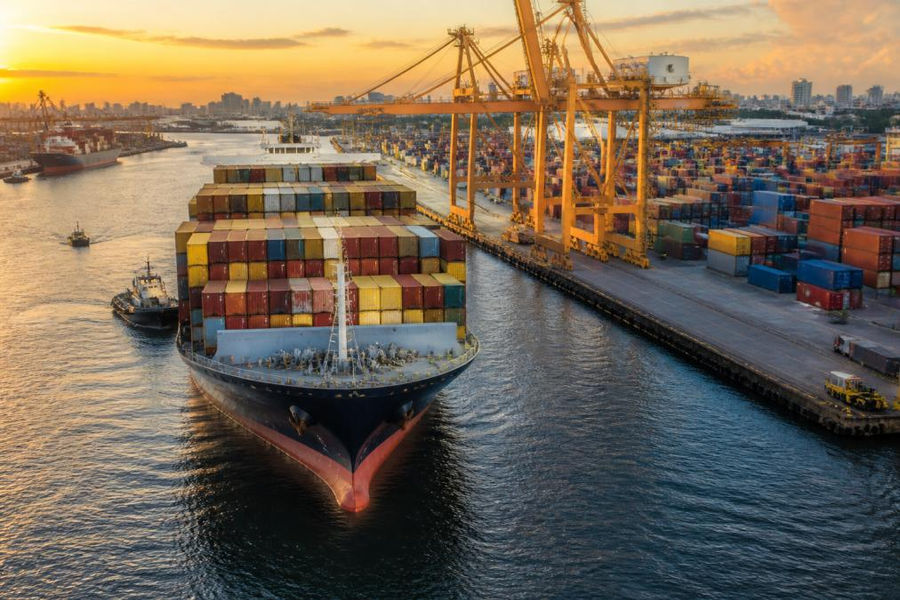
Each mode solves a different problem. Ocean freight moves the overwhelming majority of international commercial shipping volume because it's the cheapest per kilogram, but it's slow. Air cargo wins on speed and loses on cost. Land transport covers the first and last miles, plus regional moves.
Mode | Best For | Speed | Cost Profile |
Ocean freight | Bulk goods, containers | Slowest | Lowest per unit |
Air cargo | Time-critical, high-value | Fastest | Highest per unit |
Land transport | Regional, door-to-door legs | Moderate | Varies by distance |
The global cargo inspection market hit $3.14 billion in 2026 and is forecast to reach $3.77 billion by 2030, according to The Business Research Company's cargo inspection report, which tells you how much scrutiny international shipping now attracts.
From Booking to Door-to-Door Delivery
A standard booking follows a predictable sequence:
Request a shipping quote with cargo dimensions and weight
Choose port-to-port or door-to-door delivery
Confirm the freight carrier and sailing schedule
Submit shipping documentation and customs clearance paperwork
Deliver cargo to the origin port or consolidation warehouse
Track the shipment and clear customs at destination
Arrange final delivery from port to your address
Container consolidation matters here. Rinchem, working with a semiconductor manufacturer, used ocean shipping container consolidation to optimize a complex logistics network, according to the Rinchem case study. The lesson: grouping freight cuts cost without cutting control.
How Freight Shipping Rates Are Calculated
Freight shipping rates are calculated from a base ocean or air rate plus a stack of accessorial charges. The base rate depends on weight, volume, and the lane. Everything else, fuel surcharges, terminal handling, documentation fees, customs brokerage, adds to the landed cost. A 2026 Freight Report survey found that 27% of organizations lost between $5 million and $20 million to supply chain disruptions, with average losses near $4 million. That's why rate transparency matters more than the headline number.
LCL vs FCL Shipping: Which Fits Your Volume?
LCL vs FCL shipping comes down to volume. LCL (Less-than-Container-Load) means you share a container with other shippers and pay only for the space you use. FCL (Full Container Load) means you book the whole container, which usually costs less per unit once you fill enough of it. Below roughly 15 cubic meters, LCL typically wins. Above that, FCL often does. Freight-Calculator.com includes an integrated CBM calculator so you can measure your cargo volume before choosing.
Ocean Freight Transit Times and Schedule Planning
Ocean freight transit times run from about 20 to 45 days depending on the lane, plus port congestion and customs. Planning around schedule reliability beats planning around the fastest possible sailing. Rates are expected to soften as vessel capacity expands, but volatility remains, per S&P Global Market Intelligence. About 10 million TEU of container ship capacity, roughly a third of the active global fleet, is on order, according to Freightos' 2026 freight forecast.
Pro Tip Book two to three weeks before your cargo-ready date. Sailings fill, and last-minute space on a preferred lane costs more than the same space booked early.
International Shipping Documentation You Need
International shipping documentation is the paperwork that legally moves your cargo and lets customs authorities release it. A missing signature, a mismatched value, or a wrong harmonized tariff schedule (HTS) code can hold a container at the port for days, and demurrage and detention charges start accruing while you sort it out. Most practitioners find that documentation errors, not physical cargo problems, cause the majority of clearance delays.
Here is what each core document actually does, who typically issues it, and where shippers get tripped up.
Document | Purpose | Typically Issued By | Common Pitfall |
Bill of Lading (B/L) | Contract of carriage and document of title; the carrier releases cargo against it | Ocean carrier or NVOCC | Name/address mismatches between B/L and commercial invoice |
Commercial Invoice | Declares value, buyer, seller, and terms of sale for duty assessment | Exporter | Undervaluing goods or omitting Incoterms |
Packing List | Itemizes contents, weights, and dimensions per package | Exporter | Piece counts that don't match the B/L |
Certificate of Origin | Establishes country of origin for duty preference or trade-agreement eligibility | Chamber of commerce or authorized body | Claiming preference without qualifying under the trade agreement's rules of origin |
Shipper's Export Declaration / AES filing | Electronic export data filed with U.S. Customs and Border Protection for shipments above the low-value threshold | Exporter or forwarder via the Automated Export System | Filing after the cargo has already departed |
Hazardous Materials Declaration | Confirms dangerous goods are classified, packed, and labeled per DOT and IMDG requirements | Shipper, certified for hazmat | Misclassified UN numbers or expired training certificates |
How the Documents Fit Together
The commercial invoice drives the customs value. The packing list tells the carrier and customs what is physically in the box. The bill of lading ties the shipment to the carrier and controls who can claim the cargo. The certificate of origin can change the duty rate. If any one of these disagrees with the others, a value, a weight, a piece count, customs will flag the entry and request correction before release.
Classification and Valuation Basics
Every imported item needs an HTS code. The code determines the duty rate, and it also determines whether the goods are subject to additional requirements like Food and Drug Administration prior notice, Federal Communications Commission equipment authorization, or Environmental Protection Agency restrictions. Valuation generally follows the transaction value method: the price actually paid or payable, plus certain additions like assists, royalties, and the cost of packing. Getting classification or valuation wrong is the most common source of post-entry adjustments, penalties, and audits.
A Practical Pre-Shipment Checklist
Bill of lading, confirm consignee, notify party, and port pair match the commercial invoice
Commercial invoice, include Incoterms, currency, and a clear description of each item
Packing list, reconcile piece counts and weights against the B/L
Certificate of origin, verify the goods actually qualify before claiming preference
AES/EEI filing, submit before the carrier's cutoff, not after
Hazardous materials declaration, confirm UN number, packing group, and current training records
Importer of record and power of attorney, on file with your customs broker before the first entry
Pro Tip Build a single "document control sheet" that lists every field appearing on more than one document, consignee name, address, value, weight, piece count, HTS code, and reconcile them before you hand anything to the carrier. Most clearance delays trace back to a mismatch on that sheet.
Watch Out A bill of lading is a document of title. Issuing it to the wrong party, or releasing cargo without surrender of an original, can create liability that no freight savings will offset. Treat B/L instructions as seriously as payment instructions.
Where Compliance and Cost Intersect
Accurate classification is not just a compliance exercise. The right HTS code can qualify goods for a lower duty rate under a free trade agreement, and the wrong one can trigger a penalty that dwarfs the freight bill. Shippers who treat documentation as a cost center rather than a control point usually discover the difference during an audit, or during a port hold.
Cost Optimization Strategies for Cargo Shipping
Cost optimization is not one decision, it is a series of trade-offs across mode, container strategy, packaging, and inland routing.
1. Choose the Right Container Strategy: LCL vs. FCL
2. Consolidate Shipments
3. Optimize Packaging and Dimensional Weight
4. Match Mode to Urgency, Not Habit
5. Shorten the Inland Leg
6. Negotiate With Data, Not Volume Alone
7. Avoid the Hidden Costs
8. Insure and Classify Correctly
Key Takeaway The biggest cost reductions usually come from structural choices, container strategy, mode selection, packaging, and inland routing, not from squeezing the base rate. Start there before you start negotiating.
Pro Tip Track landed cost per unit, not freight cost per shipment. A cheaper freight rate on a slower lane can raise total cost once carrying cost, demurrage risk, and lost sales are included.
How to Prioritize
Frequently Asked Questions
What is the difference between LCL and FCL shipping?
LCL (Less-than-Container-Load) consolidates your cargo with other shippers in a shared container, so you pay only for the space you use. FCL (Full Container Load) gives you an entire container, which is typically more cost-effective once your shipment exceeds roughly 15 CBM. LCL suits small e-commerce orders under 5 CBM, while FCL reduces handling and transit risk for larger volumes.
What documents are required for international cargo shipping?
Core documents include the bill of lading, commercial invoice, packing list, and shipping manifest. Depending on the destination and goods, you may also need a certificate of origin, customs clearance forms, and permits for hazardous materials. Missing paperwork is one of the most common causes of port delays, so verify requirements before booking.
How are cargo shipping rates calculated?
Freight shipping rates combine chargeable weight or volume, the freight carrier's base rate, fuel surcharges, terminal handling, and customs clearance fees. Ocean freight pricing depends on container type, route, and season. Freight-Calculator.com shows a full landed cost breakdown in under 30 seconds with no registration required.
What is the role of an NVOCC in the shipping process?
An NVOCC (Non-Vessel Operating Common Carrier) consolidates cargo and contracts with ocean carriers on your behalf, issuing its own bill of lading. This gives smaller shippers access to competitive rates and freight consolidation without negotiating directly with steamship lines. Working with a licensed and bonded NVOCC also provides added accountability if a shipment goes wrong.
Get Started Today


Comments